How Much Protein Do You Actually Need to Build Muscle?
The "1 gram of protein per pound of bodyweight" rule has been repeated so often in gyms and fitness forums that most people treat it as settled science. It is not. It is a conservative rule of thumb from bodybuilding culture, and the actual research tells a more nuanced story.
Getting your protein target right matters. Too little and your body cannot build or maintain muscle effectively, no matter how hard you train. But chasing an inflated number creates its own problems: crowding out other nutrients, adding unaccounted calories, and making your diet harder to sustain. Here is what the evidence actually says.
Where does the 1 gram per pound rule come from?
The 1g/lb target became popular through bodybuilding magazines in the 1980s and 1990s. It was easy to remember, safe in that it was unlikely to cause harm, and erred toward more for an audience trying to maximize muscle. That does not make it accurate.
When researchers ran controlled trials on protein intake and muscle gain, a different picture emerged. Multiple meta-analyses now point to roughly 0.7 grams per pound of bodyweight (1.6 grams per kilogram) as the threshold at which protein intake stops producing meaningful additional muscle. Going to 1g/lb is not harmful, but the evidence for gains beyond 0.82g/lb is thin.
A 180-pound person eating 130 grams of protein daily is likely capturing the full muscle-building benefit of their diet. The same person eating 250 grams is not building more muscle. They are eating 120 extra grams their body will use for energy or simply excrete.
Does your situation change the target?
It does. The base recommendation shifts under specific conditions, and understanding them helps you land on a number that fits your actual situation rather than a generic formula.
- →Cutting or lean dieting. When eating in a calorie deficit, your body has less energy available and a greater tendency to break down muscle for fuel. Research on lean-dieting athletes suggests pushing toward the higher end of the range, around 0.9 to 1g per pound, to protect muscle mass while fat is lost. The deficit drives fat loss. Protein keeps muscle in place while that happens.
- →Eating at a surplus. When calories are plentiful, your body has less incentive to break down muscle for fuel. The lower end of the range, 0.7 to 0.8g per pound, is likely sufficient.
- →Beginners vs. experienced lifters. New lifters build muscle faster, so their bodies can put more dietary protein to use. As training age increases and the rate of muscle gain slows, the protein needed to support that growth also decreases.
- →Older adults. Muscle protein synthesis becomes less efficient with age, sometimes called anabolic resistance. People over 50 generally benefit from targeting the higher end of the range and prioritizing leucine-rich protein sources to compensate.
Does it matter when you eat your protein?
The "anabolic window" — the idea that you must consume protein within 30 minutes of finishing a workout or lose your gains — is one of the most persistent myths in fitness. Research has consistently failed to show that a narrow post-workout window is critical for muscle growth.
What does matter is spreading protein across the day rather than concentrating it in one or two meals. Your muscles remain sensitized to protein for 24 to 48 hours after a resistance training session. But each meal triggers a muscle protein synthesis response that peaks and returns to baseline within a few hours. Eating protein only at dinner means you send that signal once per day, leaving potential growth stimulus on the table.
Three to four protein-containing meals spaced three to five hours apart gives your body repeated opportunities to build muscle throughout the day. Precise timing around workouts matters far less than total daily intake and even distribution.
Can your body only absorb 30 grams of protein per meal?
No. This is gym folklore that does not hold up to scrutiny.
Your body absorbs virtually all the protein you eat. What the 30-gram figure originally referred to was not absorption but the amount thought to maximally stimulate muscle protein synthesis in a given sitting. The logic: if 30 grams saturates the anabolic response, everything above that goes to waste.
More recent research complicates this. A 2023 study found that 100 grams of protein in a single meal produced a larger and more sustained anabolic response over 12 hours compared to 25 grams. The extra protein was not wasted. Your digestive system slows protein absorption to match what your body can use, and larger doses sustain elevated amino acid levels for longer.
The practical takeaway: hitting your daily protein target matters more than engineering each meal to a precise gram count. A large protein meal is not undermining your progress.
What does hitting your target actually look like?
For a 160-pound person targeting 0.75g per pound, that is 120 grams of protein daily. Across three meals: 40 grams per meal. Across four: 30 grams. These are targets that work with normal eating patterns, not protein shakes at every meal.
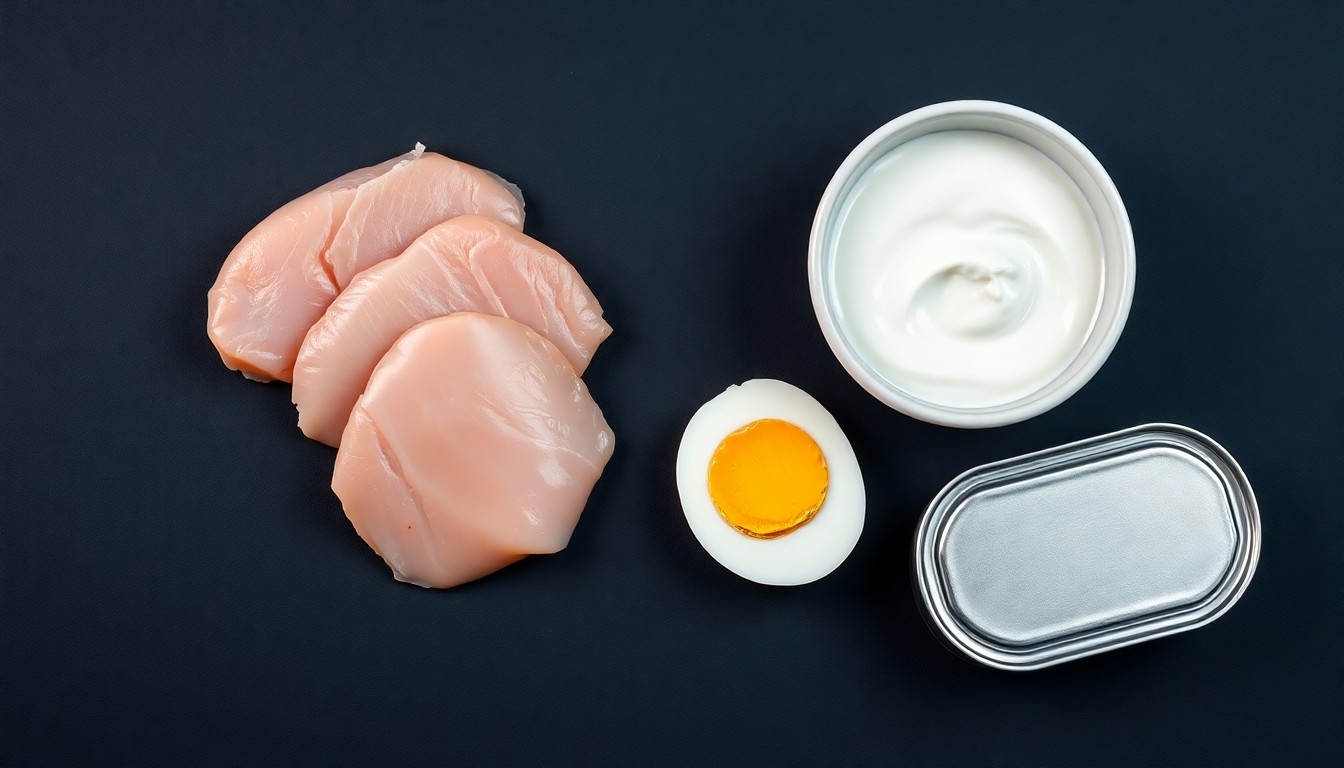
Foods dense enough to deliver 30 to 40 grams per serving without excessive calories: chicken breast (about 30g per 4oz), Greek yogurt (17 to 20g per cup), eggs combined with egg whites, cottage cheese (25g per cup), canned tuna or salmon (25 to 30g per can), and lean cuts of beef or pork. Plant-based sources work too, though you generally need higher volumes to reach the same numbers.
The single most effective change most people can make is adding a protein source to meals that currently lack one. Breakfast is where this tends to be most neglected. Starting the day with 30 to 40 grams sets a foundation that makes hitting the daily target far easier than trying to make up for it at dinner.
How do you know if your protein intake is working?
The feedback loop is slow. You cannot tell from a single week on the scale whether your protein intake is sufficient. Muscle growth is gradual, and the scale conflates it with water, food volume, and fat. A month of adequate protein combined with good training produces changes your scale weight will not capture cleanly.
What you can track: whether muscle definition is developing over time, whether strength is progressing in your sessions, and whether your body shape is shifting in the direction you are working toward. Those signals require a longer time horizon than a week or two to read clearly.
Progress photos taken under consistent conditions every one to two weeks are the most reliable way to see whether your nutrition and training are producing the body composition changes you expect. When protein is adequate and training is consistent, the physical changes accumulate. They are rarely visible day to day. Over six to eight weeks, they become undeniable.
See whether your nutrition is working
Frame keeps your progress photos consistent and comparable week over week. The guide overlay locks in your angle and position every session, so you can actually see whether your protein and training are producing results over time. Available on iOS and Android.